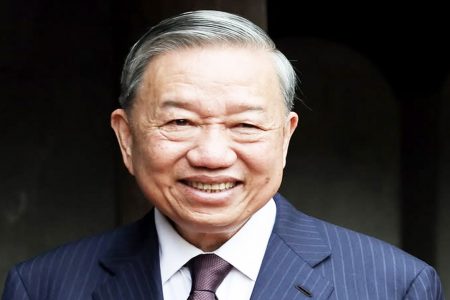
Right after the 14th National Party Congress has just concluded, General Secretary To Lam’s plan to pay an official visit to the United States in February 2026 has become the focus of international observers.
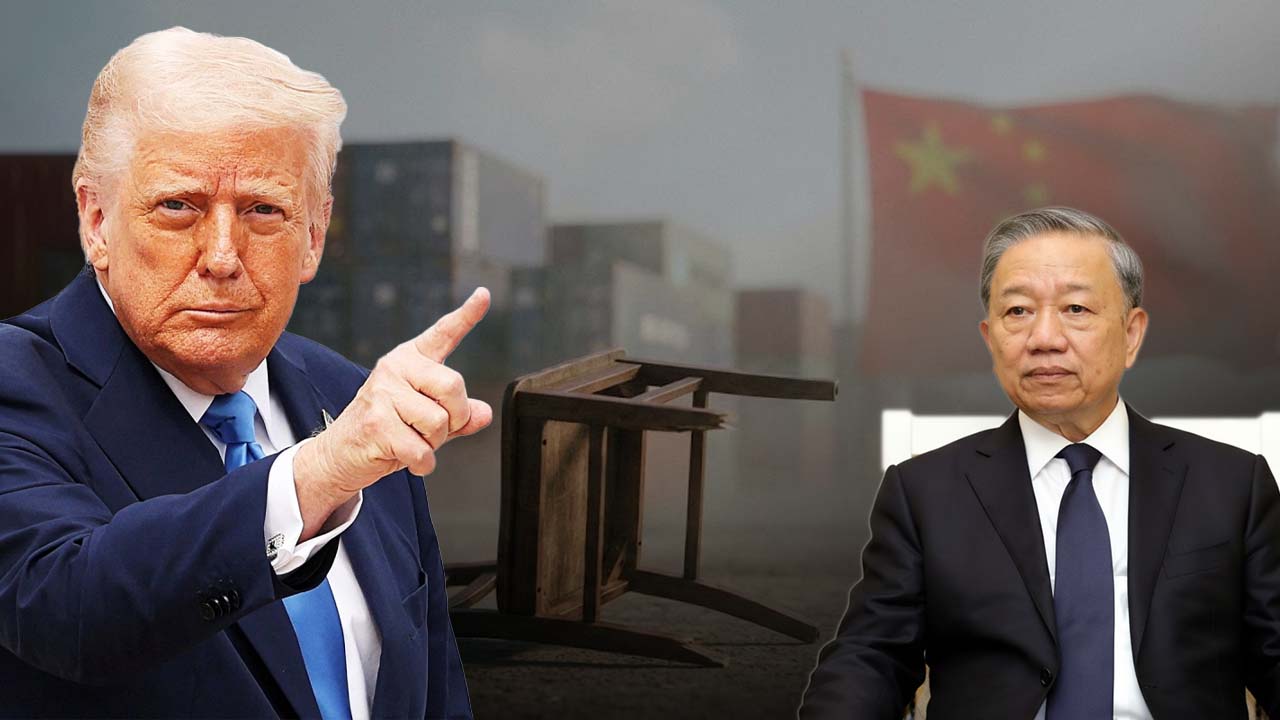
Behind the images portrayed by domestic media—describing To Lam as receiving “expectations” from President Donald Trump—lies a pressure-filled picture of personal power calculations by the top leader and the economic lifeline of Vietnam.
According to assessments by international news agencies, this trip is not merely a diplomatic formality. In reality, it is an economic “rescue mission” of vital significance for To Lam as he seeks to consolidate absolute power within the Party.
While domestic media praise Vietnam’s becoming a founding member of the “Peace Council” as proof of national standing, observers see it instead as the most prudent, low-risk diplomatic tactic to please the Trump 2.0 administration.
With a seat on the Peace Council, this becomes a “pass” for To Lam to gain an opportunity to sit down directly with Donald Trump to negotiate the issue of the trade surplus.
The figure of $133.9 billion in trade surplus has become a “fatal weakness” for Vietnam’s economy and has put Hanoi in Washington’s crosshairs.
Accordingly, a 40% tariff is hanging over goods accused of being “transshipped” from China to Vietnam and then falsely relabeled. If this issue is not resolved, Vietnam’s export economy could be paralyzed.
Observers have raised the question: why did To Lam choose this moment to step in personally instead of delegating to lower-level officials?
According to informed sources, the answer lies in a previous failure: former Minister of Industry and Trade Nguyen Hong Dien lost his position after failing to secure tariff compromises with the United States as required.
A tariff victory in the U.S. would be a major move—and evidence—demonstrating To Lam’s superior governing capacity. From there, it would bolster the legitimacy of his move to seize both of the Party’s two highest seats of power.
If he succeeds in resolving tariff pressure, To Lam would gain enormous political leverage to push for a “unification” scenario—merging the positions of General Secretary and State President—in a formally legitimate way.
Observers note that in September 2024, when he first visited the United States as both General Secretary and State President, public opinion witnessed a rare confidence in him.
This return to the U.S., as the holder of absolute power within the Party after the 14th Congress, would strengthen his position in bargaining with President Trump. It would thereby confirm his status and role as the only leader capable of handling issues of life-and-death importance for the country.
However, this gambit is far from easy, given that the counterpart is President Donald Trump—well known for a “pragmatic,” unpredictable negotiating style.
Washington is also watching Vietnam closely and suspects it may be a “link” that could be punished if it continues to help China manipulate labels of goods’ “origin” to circumvent trade rules.
Therefore, in this chess match, To Lam is not only negotiating for Vietnam’s economy, but also negotiating for his own political future within Vietnam’s new power structure.
In a context where the military faction and conservative groups are always waiting and criticizing the Party leader’s “pro-U.S.” inclination, a negotiation outcome favorable to the economy would be the safest shield for To Lam to protect his seat.
Tra My – Thoibao.de