The fact that a large number of high-ranking officials from the Ministry of Health and the Ministry of Education and Training (MOET)—agencies long regarded as the pillars of knowledge for the regime—have been successively indicted and detained has sent deep shockwaves through society.
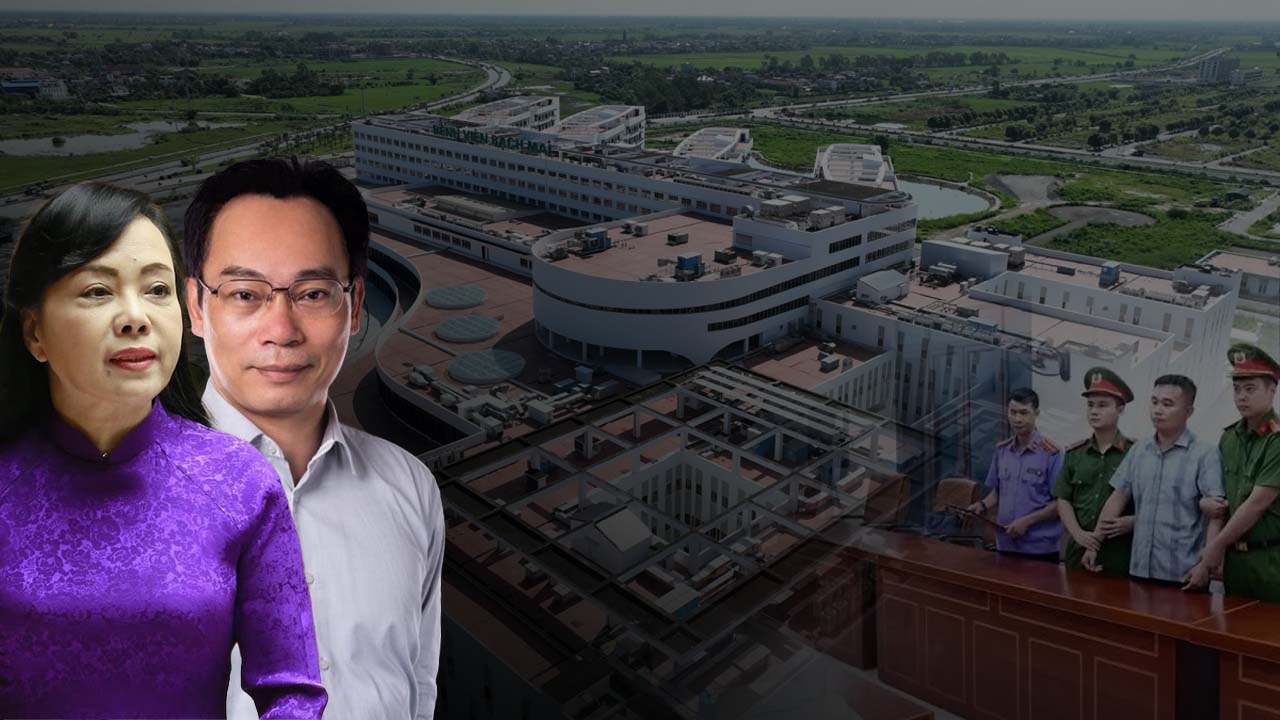
From former ministers and deputy ministers to department and division heads at the Ministry of Health implicated in bribery cases, to recent scandals involving the buying and selling of academic credentials and exam cheating in various provinces and cities, these incidents have made the corruption of power in Vietnam more evident than ever.
These are no longer merely the misdeeds of a few isolated individuals, but a wake-up call regarding a systemic disease in the very core sectors of development.
Comparing these two sectors—which one would expect to uphold the highest standards of ethics and humanity—the public can easily see how the manipulative tactics and self-serving schemes from within are eerily similar.
The most alarming commonality between the misconduct in the two ministries is that officials did not merely passively accept bribes; rather, they actively established “new rules of the game” to profit in an extremely systematic and sophisticated manner.
At the Ministry of Health, interest groups not only accepted bribes from medical supply companies but also proactively built a network spanning both domestic and international spheres to manipulate the bidding process, inflate equipment prices, and rig contracts.
At the same time, public hospitals have inadvertently become prime targets for private businesses, shifting the financial burden onto patients who are struggling to survive.
At the Ministry of Education and Training, interest groups have come to dominate the entire education system by manipulating test scores in many localities. They not only enrich themselves at the expense of parents but also deprive all other students of fair educational opportunities, creating a generation guided by a culture of cheating.
The fact that local government officials have colluded with schools to systematically organize exam fraud has transformed the entire education sector into a thoroughly unethical environment, where misconduct is becoming widespread.
While teachers and doctors are supposed to be sacred symbols of moral values, they have chosen to betray the very best values of their professions.
This has exposed to society the extremely fragile line between the moral values that should be upheld and the rampant immorality that is spreading unchecked.
The consequences of corruption in these two key ministries in social life far exceed the losses caused by purely economic crimes. It leaves deep and difficult-to-heal wounds on society.
For patients, corruption means being deprived of the chance to live, as they are forced to pay amounts many times the actual value or face the risks of substandard medical equipment.
For the younger generation, exam cheating undermines fairness and stifles the drive to excel; more importantly, it creates a widespread crisis of trust.
When two sectors tasked with caring for people’s physical and mental well-being are both corrupted by dirty money, the majority of the public’s trust in the regime erodes even further.
The core issue is not merely exposing the perpetrators but demands a more far-reaching institutional reform in Vietnam than ever before.
Mechanisms to check power must be established to eliminate opportunities and the environment for manipulative behavior, and all critical stages of the entire system must be made transparent.
Only when there is a strict and fair legal foundation can the two noble titles of “doctor” and “teacher” once again truly embody their symbolic status as representations of compassion and knowledge.
Trà My – Thoibao.de