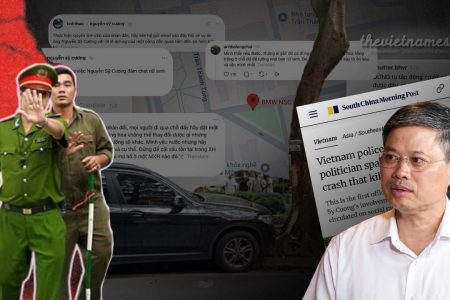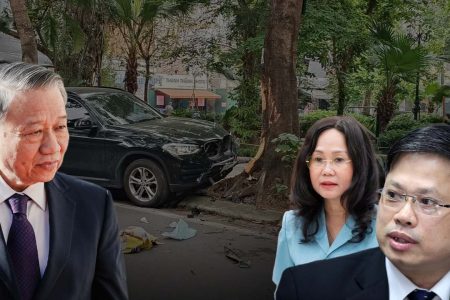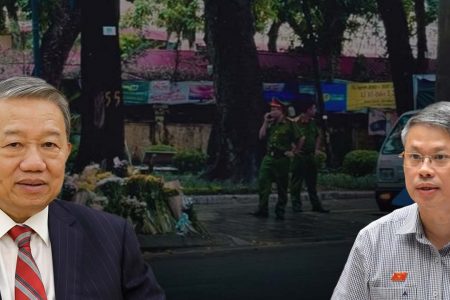
Vietnam Television (VTV) has been reported to the authorities for providing and disseminating false information that infringes on citizens’ honor and dignity on social media.
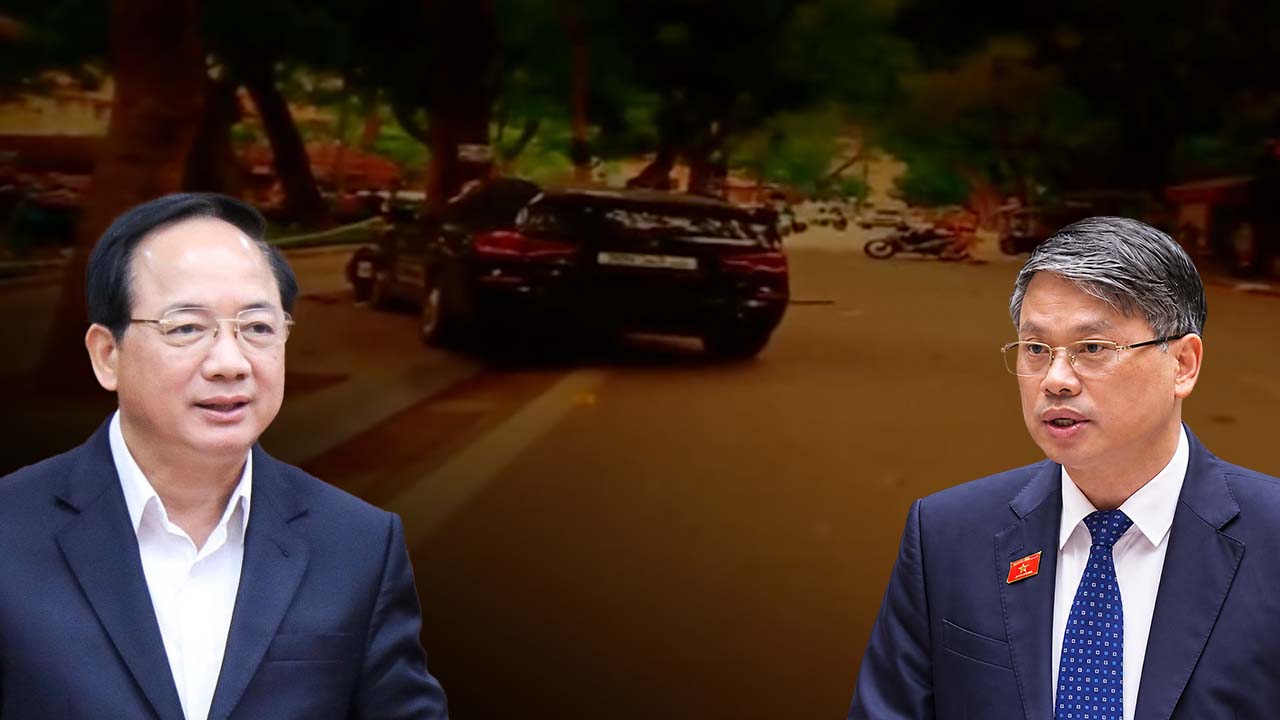
Notably, less than 24 hours after VTV aired its report on Mr. Nguyen Sy Cuong on Vietnam National Television (VTV), the network found itself in an unprecedented media crisis.
The online community—particularly Gen Z, with its extremely sharp critical eye—quickly dissected every frame, pointing out a series of implausible details and logical flaws in the report’s content.
Public pressure was so intense that, according to observers, the network was forced to repeatedly delete, edit, and repost the report, creating a scene of rare confusion for a major national media outlet.
VTV’s confusion stemmed from glaring legal and factual errors. One of the most shocking details discovered by viewers was found right in the on-site report that VTV aired: the phrase “Hai Ba Trung Ward.”
In reality, this administrative district name only came into existence after a recent merger, whereas at the time the accident occurred, that name did not exist at all.
The appearance of a place name that appears to have been “jumped the gun” in a legal document raises two possibilities: either the report was rewritten at a later date and the original dates were falsified, or the production team was so careless that they simply “made it up” without verifying the facts.
Furthermore, Mr. Nguyen Sy Cuong’s “Toxicology Test Results” also reveal “serious” legal contradictions.
According to the report, the results recorded on May 31, 2025, indicated that Mr. Cuong’s blood ethanol concentration was 24.82 mg/100 ml of blood, which is equivalent to drinking approximately two cans of beer. However, this examination took place 24 hours after the incident occurred on May 31.
Based on physiological principles, if the blood alcohol concentration remained at this level after a full day and night, then at the time of the accident, the suspect’s blood alcohol concentration must have been extremely high.
From a legal perspective, Attorney Ha Huy Son argues that, according to regulations, a standard legal proceeding must include an indictment decision before there can be a basis for issuing a decision to exempt the suspect from criminal liability.
The fact that VTV released documents “exempting Mr. Cuong from criminal liability” based on statements by a representative of the Hanoi Police—before the basic procedural steps had been fully completed—further highlights serious irregularities in the handling of this case.
Why did a VTV television report—which carries political and legal significance, was prepared by a professional team, and relied on information provided by the investigative agency—allow such speculative and illogical errors to slip through?
This is no longer merely a technical error or a simple professional oversight. It raises serious questions about the integrity of the entire case file and the honesty behind efforts to use state-run media to legitimize an unlawful decision to decline to indict.
As viewers uncover the discrepancies in VTV’s report, public trust will extend to the state apparatus’s entire law enforcement process.
This serves as a blunt warning that, in the 4.0 era, a lack of transparency or attempts to cover things up will quickly be exposed to public scrutiny.
It is time for the Central Propaganda Department to examine VTV’s responsibility for airing false information on national television, as these errors are directly eroding public trust.
The public is asking: Now that Gen Z has “exposed” VTV’s serious errors as described above, how long will it take for action to be taken?
Trà My – Thoibao.de