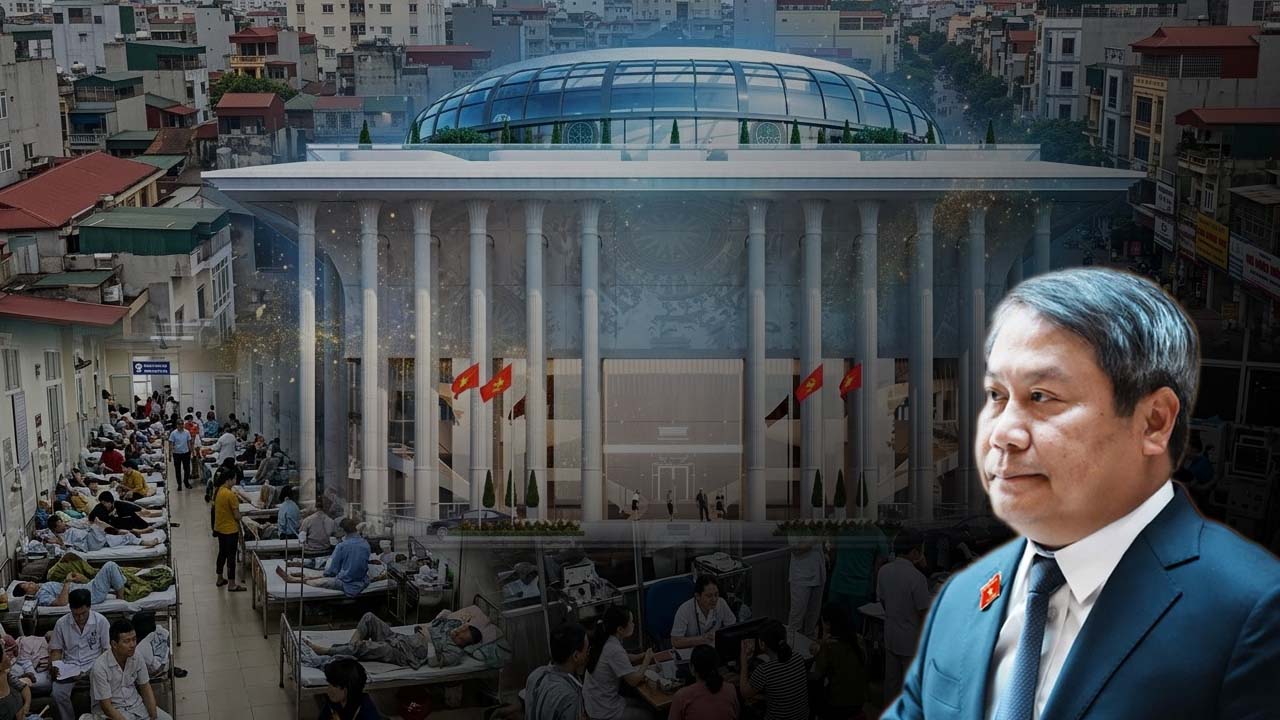
Hanoi has just “bombarded” public opinion with a proposal to spend 2 trillion đồng in tax money to build a 2,500-seat theater on Võ Thị Sáu Street. In a context of traffic congestion and overloaded hospitals, this decision, in the eyes of observers, is not merely a cultural question but a large-scale “mega-project for laundering responsibility.”
The Art of “Pouring Concrete” for Interests
Why a theater, and why now?
A silent “money vacuum”: A 2-trillion-đồng theater is a lucrative prize for groups of subcontracting interests. Once completed, its annual operating and maintenance costs will become an endless flow of money from the state budget into private pockets, under the banner of “sustaining the arts.”
A buffer zone for past wrongdoing: Launching a new multi-trillion-đồng project is often the most effective way to cover up or “legitimize” losses from previous unfinished projects. As bricks and concrete pile up, inspections and audits get drawn into a new maze of expenses, causing older violations to gradually sink into oblivion.
The Tragedy of “Treating the People Like Children”
Ironically, in the crowded and cramped Bạch Mai ward, instead of a park or a school, residents are being handed a luxurious “sanctuary” that they may never set foot in. The system is staging a play about “raising public awareness” to conceal its real objective: appropriating public space for group interests.
Those 2,500 seats may remain forever empty of audience members, but they have certainly already been filled with calculations made at higher levels. When the stage lights go out, the only thing left behind will be the burden of 2 trillion đồng pressing down on the shoulders of taxpayers.